
Table of Contents
- Why Quality Kitchenware Materials Matter
- Understanding Stainless Steel Grades and How to Identify Food Grade Stainless Steel
- Evaluating Weight, Balance, and Construction Quality
- Assessing Nonstick Coatings and Safety Standards
- Signs of Low Quality Kitchen Utensils to Avoid
- Best Cookware Materials for Health and Longevity
- Practical Testing Methods You Can Do at Home
- Maintenance and Long-Term Durability Indicators
- Frequently Asked Questions
Last Updated: September 4, 2026
Why Quality Kitchenware Materials Matter
Walk into any big-box store and you will see wall-to-wall cookware that claims to be premium. Most of it is not. The difference between a pan that lasts twenty years and one that warps in six months comes down to the materials themselves, and learning how to spot quality kitchenware materials is a skill that saves money and frustration. At CrispNest, we curate kitchen essentials, and the single biggest mistake we see shoppers make is trusting a brand name instead of inspecting the construction.
Quality kitchenware materials are the physical building blocks that determine heat distribution, durability, and food safety. Cheap cookware often uses thin gauge metal, low-grade coatings, and poor handle attachments that fail under normal use. Before you spend real money, you need to know what to look for, because a heavy price tag rarely guarantees a heavy-bottomed pan.
Below, we will show you exactly how to evaluate stainless steel grades, test weight and balance, assess nonstick coatings, and identify defects that signal a short lifespan. The methods take about ten minutes in a store or at home.

Understanding Stainless Steel Grades and How to Identify Food Grade Stainless Steel
Food grade stainless steel is a corrosion-resistant alloy that contains at least 16% chromium, which forms a protective layer that prevents rust and keeps metals from leaching into food (the FDA). The most common food-safe grades are 304 and 316, and you will usually see them labeled by their chromium and nickel content, such as 18/10 or 18/8. When you are learning how to identify food grade stainless steel, the first step is flipping the pot over and reading the stamped grade.

18/10 vs 18/8 Stainless Steel
The numbers refer to the percentage of chromium and nickel in the alloy. 18/10 stainless steel contains 18% chromium and 10% nickel, while 18/8 contains 18% chromium and 8% nickel. The higher nickel content in 18/10 gives it slightly better corrosion resistance and a brighter, more polished finish. For everyday home cooking, both are food-safe and durable, but 18/10 is the mark of higher-end cookware.
A quick note on terminology: the U.S. Food and Drug Administration regulates materials that contact food, and the FDA food contact substance guidelines require that cookware not transfer harmful amounts of substances to food. Both 304 and 316 stainless steel meet these standards, so look for the grade stamp as your first quality signal.
Magnetic Testing for Authenticity
A simple magnet can tell you a lot about your stainless steel. Most 18/10 and 18/8 stainless steel is non-magnetic because the nickel content stabilizes the metal structure. If a strong magnet sticks firmly to the side of a pot labeled 18/10, you may be looking at a lower-grade alloy with less nickel. The exception is the bottom of induction-compatible pans, which often have a magnetic layer of steel added for heating.
Evaluating Weight, Balance, and Construction Quality
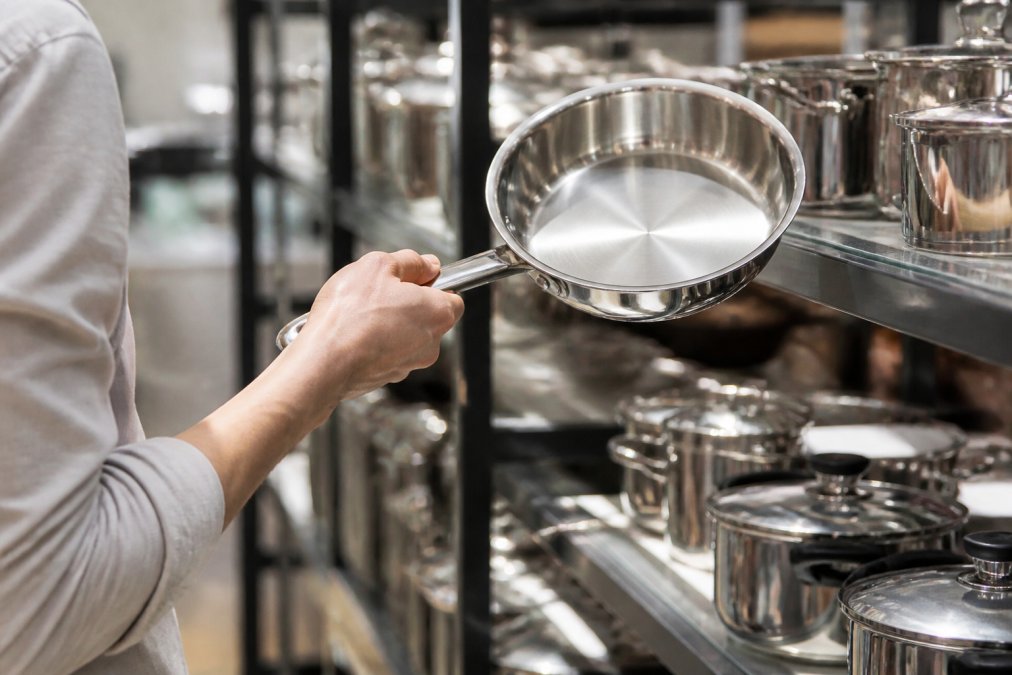
Quality kitchenware materials feel substantial in the hand because they are thick and dense. A common mistake is confusing weight with clunkiness, but a well-made pan distributes that weight evenly. Pick up a pot by its handle and hold it at arm's length. If the pan tips forward heavily, the handle is too light or attached poorly. Good balance means the pan stays level when empty.
The Importance of Heavy-Bottomed Design
Heavy-bottomed pans are the gold standard for even cooking because the thick base stores heat and releases it steadily. Thin pans develop hot spots that scorch food in one area while leaving another undercooked. Look for a base thickness of at least 2.5 millimeters, and check that the bottom is flat enough to sit flush on your stovetop. A pan that rocks or spins has a warped base and will never heat evenly.
Cladding and Ply-Construction Explained
Cladding is the process of bonding multiple layers of metal into a single sheet. Tri-ply construction, the most common quality standard, sandwiches a highly conductive aluminum or copper core between two layers of stainless steel. The stainless steel provides durability and a non-reactive surface, while the core spreads heat quickly across the entire pan. Fully clad cookware extends this construction up the sides, not just the bottom, which prevents scorching when you cook with higher liquid levels.
Assessing Nonstick Coatings and Safety Standards
Nonstick coatings are where the market gets confusing, and where cheap products hide the most. Quality nonstick cookware uses a coating applied in multiple layers over a properly prepared surface, which resists scratching and peeling. Low-quality coatings are thin, and they begin to flake within months.
Modern nonstick coatings fall into two categories: PTFE-based and ceramic. PTFE-based coatings, often marketed as PFOA-free, are durable and genuinely nonstick, but they degrade if overheated above roughly 500°F. Ceramic coatings are made from a silica-based sol-gel and are free of PTFE and PFOA entirely, but they tend to lose their nonstick properties faster. The Environmental Protection Agency's safer choice guidance provides a useful reference for understanding which chemicals are restricted in cookware manufacturing.
Signs of Low Quality Kitchen Utensils to Avoid
Spotting signs of low quality kitchen utensils is easier than you think once you know what to check. Poorly made tools fail at the joints, the handles, and the finish. A utensil that flexes when you apply pressure, a handle that feels hollow, or a rivet that is loose are all red flags that the item will not survive regular use.

Warping, Corrosion, and Structural Damage
Warping happens when a pan is heated too quickly or cooled too fast, and it is the most common cause of premature cookware failure. To test for warping, place the pan on a flat surface and try to rock it. Corrosion appears as pitting, rust spots, or discoloration, and it often starts at scratches where the protective chromium layer is breached. Structural damage also includes handles that wobble or rivets that are not flush with the surface.
Poor Finish and Manufacturing Defects
Run your fingers along the rim of a pot and the edge of a pan. Quality cookware has smooth, rolled edges. Sharp or rough edges are a manufacturing shortcut that leaves the raw metal exposed, which invites rust and makes cleaning harder. Look at the interior surface under bright light. Pitting, tiny bubbles, or uneven texture in the metal indicates poor casting or finishing. Finish consistency matters because defects create spots where food sticks and bacteria can hide.
Best Cookware Materials for Health and Longevity
Choosing the best cookware materials for health and longevity comes down to matching the material to how you cook. No single material does everything well, so most serious home cooks own a mix of stainless steel, cast iron, and a nonstick pan for eggs.
Cast Iron and Enameled Cast Iron
Cast iron is nearly indestructible, and it offers unmatched heat retention for searing and frying. Bare cast iron requires seasoning, a layer of polymerized oil that creates a natural nonstick surface and prevents rust. Enameled cast iron adds a glass-like coating that eliminates the need for seasoning, and it is non-reactive, which means you can cook acidic foods like tomato sauce without a metallic taste. The main drawback is weight, and enameled versions can chip if dropped.
Hard-Anodized Aluminum and Copper Core Options
Hard-anodized aluminum is aluminum that has been electrochemically treated to create a surface harder than steel. It heats quickly and evenly, resists scratching, and is lighter than stainless steel or cast iron. The anodized layer is non-reactive, so it does not leach into food. Copper core cookware offers the best thermal conductivity of any material, heating faster and more evenly than aluminum, but copper is reactive and must be lined with stainless steel or tin. Copper core pans are expensive, and they require polishing to maintain their appearance.
Practical Testing Methods You Can Do at Home
You do not need a lab to evaluate quality kitchenware materials. These practical testing methods take minutes and reveal the true construction of any piece.
Visual and Tactile Inspection
Start with the visual inspection. Check the thickness of the metal at the rim, because the rim is where manufacturers save money. A thin rim means the entire pan is likely thin. Feel the handle where it meets the body, and confirm the rivets are tight and smooth. Look for a mirror finish on stainless steel, which indicates proper polishing, but note that brushed finishes are also quality and hide scratches better.
Heat Response and Thermal Conductivity Tests
If you are shopping at home, run a simple heat test. Place the empty pan over medium heat for sixty seconds, then sprinkle a few drops of water on the surface. On a quality pan, the water should bead up and dance across the surface, the Leidenfrost effect that signals even heat distribution. On a thin pan, the water will spread out and boil rapidly in the hottest spots. This test also reveals hot spots that cause scorching. For stainless steel, check heat responsiveness by feeling the handle after two minutes; a quality pan conducts heat evenly up the sides, but the handle should stay cool if it has good thermal breaks.
Maintenance and Long-Term Durability Indicators
The best quality kitchenware materials still need correct care, and your maintenance habits are a direct indicator of how long your cookware will last. Stainless steel should be cleaned with mild detergent and a non-abrasive pad, and you can restore its shine with a dedicated stainless cleaner. Cast iron should be dried immediately after washing and given a light coat of oil to prevent rust. Hard-anodized aluminum is dishwasher safe on most models, but hand washing always extends the finish.
Watch for these durability indicators over the first year of ownership. A quality pan will develop a patina on stainless steel, which is normal and does not affect performance. It will not warp, the handles will stay tight, and the nonstick coating will remain intact. If you see peeling coating, rust spots, or a pan that has begun to spin on a flat surface, the material quality was poor from the start.
| Material | Best For | Watch Out For | Lifespan |
|---|---|---|---|
| 18/10 Stainless Steel | Searing, sauces, everyday | Shows scratches, needs oil to prevent sticking | Decades |
| Cast Iron | High-heat searing, baking | Heavy, requires seasoning | Lifetime |
| Enameled Cast Iron | Braising, acidic dishes | Chips if dropped | 10-20 years |
| Hard-Anodized Aluminum | Quick, even heating | Coating can wear over time | 5-10 years |
| Copper Core | Precise temperature control | Expensive, needs polishing | Lifetime |
A well-chosen pan is an investment in your daily routine. The CrispNest collection focuses on durable stainless steel and cast iron pieces, like the heavy-duty cast-iron breakfast pan, which delivers the heat retention and even cooking that quality materials provide. When you buy a piece that is built from the right materials, you buy it once and use it for decades.
Choosing the right cookware means looking past the marketing and inspecting the actual construction, from the stainless steel grade to the thickness of the base. At CrispNest, we apply these same standards when selecting every kitchen essential we offer, focusing on durable materials that perform reliably through years of daily use. Explore our range of stainless steel cookware and cast iron pieces, backed by fast shipping and a satisfaction guarantee, and add a piece to your cart that will earn its place in your kitchen.
Frequently Asked Questions
What should I look for in quality cookware?
Quality cookware starts with weight and balance. Heavy-bottomed pans with solid construction distribute heat evenly and resist warping. Check for 18/10 stainless steel, which contains 18% chromium and 10% nickel for superior corrosion resistance and durability. Examine the finish for consistency, riveted handles that don't wobble, and cladding that extends up the sides. Avoid thin-bottomed pieces and cookware with loose handles or uneven surfaces.
How can I tell if stainless steel is high quality?
High-quality stainless steel should be magnetic-resistant when it contains 18/10 composition, though some austenitic grades show minimal magnetism. Run a magnet over the surface; if it sticks strongly, the steel may be lower grade or ferritic. Inspect the gauge thickness by feeling the weight in your hand. Premium cookware feels substantial and balanced. Look for smooth, consistent finish without pitting, discoloration, or rough edges. Check for manufacturer markings indicating grade certification.
What are the signs of poor-quality kitchen utensils?
Poor-quality utensils show visible manufacturing defects like uneven surfaces, rough edges, or inconsistent finish. Watch for warping when the pan sits flat on a table, loose or riveted handles that wobble, thin bottoms that dent easily, and discoloration or corrosion spots. Cheap nonstick coatings peel or flake within months. Handles may be uncomfortable or poorly balanced. Check the weight; lightweight pans often indicate thin construction and poor heat distribution. Avoid items with sharp edges or burrs.
What materials should I avoid in cookware?
Avoid ultra-cheap stainless steel blends with low chromium content that rust easily. Stay away from cookware with PTFE-based nonstick coatings that haven't been certified PFOA-free, especially if you cook at high temperatures. Thin aluminum without hard-anodization can leach into acidic foods. Poorly enameled cast iron with thin enamel layers chips easily. Avoid cookware with hollow handles that conduct heat, loose rivets, or handles attached with adhesive rather than mechanical fastening. Skip items without manufacturer warranties or clear material specifications.
This article was written using GrandRanker


