
Table of Contents
- Why Look Beyond CoreHome for Kitchenware?
- Quick Comparison: Top Kitchenware Alternatives
- Non-Toxic Kitchen Tools: What to Look For and Top Picks
- Buy It for Life Kitchen Brands: Best Long-Term Investments
- Sustainable Kitchenware Essentials for Eco-Conscious Cooks
- How to Choose Durable Kitchen Tools That Last
- Maintenance and Restoration: Extending the Life of Your Kitchenware
- Final Thoughts: Making the Switch to Quality Kitchenware
- Frequently Asked Questions
Last Updated: September 7, 2026
Why Look Beyond CoreHome for Kitchenware?
Many mainstream kitchenware lines prioritize low manufacturing costs over material safety and long-term durability, which is why home cooks are searching for the best alternatives to corehome kitchenware that actually deliver.
Below, we'll show you how to identify kitchenware alternatives that offer better value, safer materials, and genuine longevity.
Quick Comparison: Top Kitchenware Alternatives
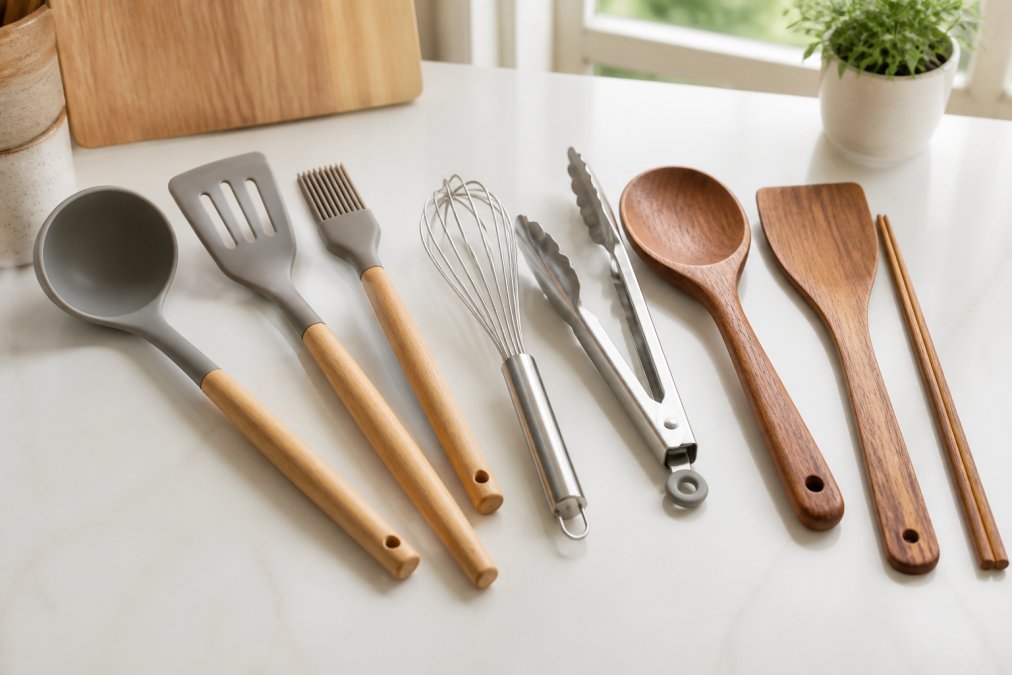
The most reliable kitchenware alternatives fall into a few clear categories based on material and construction. Stainless steel offers unmatched durability, silicone provides flexibility without scratching cookware, and cast iron delivers superior heat retention.
| Material | Best For | Durability | Maintenance |
|---|---|---|---|
| Stainless Steel | Searing, stirring, serving | Decades with proper care | Dishwasher-safe, occasional polish |
| Silicone (food-grade) | Nonstick cookware, baking | Years without warping | Dishwasher-safe, heat-resistant |
| Cast Iron | High-heat cooking, braising | Generations if seasoned | Hand-wash, season regularly |
| Bamboo/Wood | Stirring, serving, salad tools | Years with oiling | Hand-wash, avoid soaking |
For everyday cooking, a coordinated set that combines silicone heads with comfortable handles protects your nonstick pans. The 14-Piece Silicone Kitchen Utensil Set from CrispNest covers whisking, flipping, serving, and stirring with heat-resistant silicone rated up to 446°F (230°C), plus a countertop holder.

Non-Toxic Kitchen Tools: What to Look For and Top Picks
Non-toxic kitchen tools are made without harmful chemicals like PFAS, BPA, lead, or cadmium that could leach into food during preparation. At high temperatures, low-quality plastics and coatings can break down and release compounds you don't want in your meals.
The FDA regulates food-contact substances but does not pre-approve every material; manufacturers are responsible for compliance (the FDA). A "food-safe" label on a budget utensil may only reflect basic compliance, not rigorous third-party testing.
Understanding the Chemical Risks
- PFAS (Per- and polyfluoroalkyl substances): Often used in nonstick coatings, PFAS are dubbed "forever chemicals" because they persist in the environment and the human body. While the FDA has phased out some legacy PFAS from food-contact applications, newer short-chain variants are still in use, and their long-term health effects remain under study (the FDA). If a utensil is marketed as "nonstick" without specifying the coating chemistry, it may contain PFAS compounds.
- BPA (Bisphenol A): Found in polycarbonate plastics and some epoxy resins used in utensil handles, BPA is an endocrine disruptor. The FDA banned BPA in baby bottles and sippy cups in 2012, but it remains legal in other food-contact materials (the FDA). Look for "BPA-free" labels, but note that some substitutes like BPS (Bisphenol S) may have similar effects.
- Lead and cadmium: These heavy metals can appear as contaminants in cheap pigments used to color plastic handles or ceramic coatings. The FDA sets action levels for lead in food-contact ceramics, but imported goods sometimes slip through. A simple test: if a brightly colored utensil has a strong chemical odor or the color rubs off on your fingers, treat it as suspect.
- Melamine: Often used in cheap plastic dinnerware and some utensil handles, melamine can migrate into food, especially when heated. The FDA warns against using melamine products in microwaves. If a utensil feels hard, glossy, and lightweight, it may contain melamine.
What the Safest Materials Actually Are
Food-grade silicone is stable at high heat, but not all silicone is equal. Platinum-cured silicone leaves fewer residual compounds than peroxide-cured. A quick test: twist and pinch the silicone. If it turns white or has a visible seam, it likely contains fillers.
Uncoated stainless steel is naturally inert, meaning it won't react with acidic foods. The grade matters. 304 stainless steel (18/8) offers excellent corrosion resistance; 430 contains less nickel, making it less expensive but also less resistant to pitting and rust. For kitchen tools, 304 is the better choice.
Untreated wood and bamboo are naturally antimicrobial and free of synthetic chemicals. The risk is the finish: some manufacturers coat handles with polyurethane or varnish that can degrade with heat and washing. Look for tools finished with food-safe mineral oil or beeswax, or leave them unfinished.
How to Verify Safety Claims
- Check for third-party certifications: Look for NSF International certification or FDA-compliant statements on packaging.
- Avoid vague marketing terms: "Eco-friendly," "green," and "natural" are not regulated terms. "Food-grade" and "FDA-compliant" have specific meanings, but even these require scrutiny.
- Test at home: Heat the utensil in simmering water for five minutes, then smell it. A chemical or plastic odor indicates off-gassing.
- Check the recycling code: On plastic utensils, codes 3 (PVC), 6 (polystyrene), and 7 (other, may contain BPA) are the most problematic. Codes 2 (HDPE) and 5 (polypropylene) are safer but still not ideal for high-heat use.
The 9-Piece Stainless Steel Kitchen Gadget Set gives you nine essential prep tools including a whisk, pizza cutter, and garlic press. For cooks who want maximum protection for nonstick cookware, the 12-Piece Silicone Utensil Set with Holder pairs soft silicone heads with smooth beechwood handles.

The Case for Uncoated Stainless Steel
If you are replacing nonstick-coated utensils, uncoated stainless steel eliminates the coating question entirely, there is no layer to scratch, flake, or degrade. The trade-off is that it conducts heat more readily than silicone, so it is not ideal for nonstick pans. For that use case, silicone remains the safer choice. For everything else, stainless steel is the most chemically inert option available.
Buy It for Life Kitchen Brands: Best Long-Term Investments
Buy it for life kitchen brands focus on timeless materials, repairable construction, and designs that don't follow trends. Spending more upfront on quality is cheaper than repeatedly replacing budget tools.
But "cheaper over time" is a claim, not a calculation. Let's run the numbers.
The Real Cost-Per-Use Math
Consider a home cook who prepares two meals per day, 365 days per year. That's 730 cooking sessions annually, 7,300 uses over a decade.
Scenario A: Budget silicone spatula at $8
- Replacement cycle: Every 12-18 months, the head warps, the handle loosens, or the silicone develops a sticky film that won't wash off.
- Conservative estimate: 7 replacements over 10 years.
- Total purchase cost: $56.
- Cost per use: $56 ÷ 7,300 = $0.0077 per use.
Scenario B: Premium heat-resistant silicone spatula at $25
- Replacement cycle: 10+ years with normal care.
- Total purchase cost: $25.
- Cost per use: $25 ÷ 7,300 = $0.0034 per use.
That's a 56% savings per use for the premium tool.
The Hidden Costs of Cheap Cookware
The cost-per-use model applies even more dramatically to cookware. A budget nonstick skillet at $30 typically needs replacement every 2 years when the coating starts flaking, $150 over 10 years. A cast iron skillet at $40 lasts generations. Even a high-end stainless steel skillet at $150 costs $0.02 per use over 7,300 uses, and retains resale value.
There's also the health cost. When a nonstick coating flakes, those particles can end up in your food. While the FDA considers intact coatings safe, avoiding the risk entirely is a choice many prefer.
What "Buy It for Life" Actually Requires
Buy-it-for-life kitchenware is not about buying the most expensive item once. It's about buying items that are repairable and maintainable. A cracked cast iron skillet can sometimes be welded; a wooden board can be sanded and re-oiled; a loose rivet on a steel pot can be tightened. None of these are possible with cheap, molded, or coated alternatives.
Before purchasing any "investment" kitchen item, ask three questions:
- Can this be repaired? If the handle breaks, can you replace it, or is the whole item trash?
- Is the material timeless? Stainless steel, cast iron, and solid wood have been used for centuries. A trendy colored coating may not be available for touch-up in five years.
- Does the warranty actually mean something? Many premium brands offer lifetime warranties, but read the fine print. Some exclude normal wear, while others cover only manufacturing defects.
Applying the Framework to Real Purchases
Stainless steel cookware and utensils are the backbone of this approach. The 12-Quart Stainless Steel Pressure Cooker offers three pressure settings and includes a steaming rack and tempered-glass lid. Its stainless steel body has no coating to degrade, and the gasket is a replaceable part, exactly the kind of repairability that makes buy-it-for-life possible.
Cast iron is another category that genuinely lasts generations. The 5-Cavity Cast-Iron Breakfast Pan distributes and retains heat for evenly cooked eggs and pancakes, and with proper seasoning, it improves with age. If you damage the seasoning, it's not a defect, it's a prompt to re-season, which costs pennies and takes an hour in the oven.
When Buy-It-for-Life Doesn't Apply
There are honest exceptions. Silicone utensils degrade after a decade or more of heavy use; wooden tools crack if not maintained; and specialty tools like garlic presses have moving parts that wear out regardless of quality. For these, the goal is "maximum useful life", buy the best you can justify, maintain it properly, and replace it only when repair is genuinely impossible.
Sustainable Kitchenware Essentials for Eco-Conscious Cooks
Sustainable kitchenware essentials reduce environmental impact through longer product lifespans, recyclable materials, and manufacturing processes that avoid persistent chemicals. Choosing tools you won't need to replace is the most direct way to cut kitchen waste.
Stainless steel is infinitely recyclable and requires no coatings that degrade over time. Silicone, while not biodegradable, is highly durable and doesn't break down into microplastics during normal use. The 7-Piece Gold Stainless Steel Utensil Set with Rack adds polished style with gold-tone stainless steel heads and a matching countertop rack.
For cooks who prefer visual warmth, the Rainbow Stainless Steel Kitchen Utensils offer a smooth, durable finish that doesn't chip or peel, available as individual tools or a coordinated four-piece set.
How to Choose Durable Kitchen Tools That Last
Choosing durable kitchen tools comes down to material composition, construction quality, and how the tool fits your actual cooking habits. Start by identifying what you cook most often, then select tools that match.
- Check for solid, one-piece construction: Tools with welded or riveted joints fail faster than those with seamless designs.
- Look for heat resistance ratings: Quality silicone is rated to at least 400°F (200°C); anything vague about heat limits is a red flag.
- Test the handle grip: A comfortable, secure handle prevents accidents and makes the tool pleasant to use daily.
- Verify dishwasher compatibility: If you won't hand-wash, choose stainless steel or high-quality silicone that survives machine cycles.
The 3-in-1 Silicone Spatula Tongs demonstrate smart construction with a detachable design that combines a slotted turner, solid spatula, and food-gripping tongs, reducing drawer clutter while covering three common tasks.
Maintenance and Restoration: Extending the Life of Your Kitchenware
Proper maintenance transforms good kitchenware into lifelong investments. Stainless steel tools need only regular washing and occasional polishing. Silicone utensils require no special care beyond standard cleaning, though avoiding direct flame contact preserves them.
Cast iron demands the most attention but rewards it generously. After each use, wash with minimal soap, dry thoroughly, and apply a thin layer of oil to maintain the seasoning. The 12-Piece Black Silicone Cooking Utensil Set sidesteps this maintenance with soft silicone heads and natural wood handles.

For cooks who want versatility without cabinet clutter, the Bluebow 12-Quart Air Fryer Oven consolidates air frying, baking, roasting, and dehydrating into one countertop appliance.
Final Thoughts: Making the Switch to Quality Kitchenware
The best kitchenware alternatives share one trait: they're built from honest materials that perform without compromise. Whether you prioritize non-toxic safety, eco-friendly sustainability, or lifetime durability, the switch away from disposable tools pays off in both cooking results and long-term savings.
CrispNest curates kitchen essentials that combine modern style with practical functionality, backed by fast, reliable shipping and a satisfaction guarantee. Customers like Sophia W. note that "the quality exceeded my expectations," while Daniel K. highlights that "the attention to detail is amazing." If you're ready to upgrade your kitchen with tools that genuinely last, explore the 14-Piece Silicone Kitchen Utensil Set and feel the difference quality makes in every meal you prepare.
Frequently Asked Questions
What are the best non-toxic kitchen tools to buy?
Look for utensils made from food-grade silicone, stainless steel, bamboo, or wood. These materials are PFAS-free and won't leach chemicals into your food. Silicone utensils are heat-resistant and gentle on nonstick pans, while stainless steel offers durability for heavy-duty tasks. Avoid plastic utensils that can melt or harbor bacteria. Our 14-Piece Silicone Kitchen Utensil Set is a great start, offering a complete set of non-toxic, heat-resistant tools.
How do I identify high-quality, long-lasting kitchenware?
Check the material and construction. Stainless steel should be thick and gauge-heavy, not flimsy. Silicone should be food-grade and heat-resistant. Wooden handles should be smooth and well-attached. Look for items that feel balanced and sturdy in your hand. A good test: if it bends easily or feels hollow, it's likely not built to last. Investing in durable pieces from reputable brands is the essence of the buy it for life philosophy.
Are silicone utensils better than stainless steel for nonstick cookware?
Yes, silicone is generally safer for nonstick cookware because it's softer and won't scratch the surface. Stainless steel utensils, while durable, can leave marks on nonstick pans. For everyday cooking with nonstick, choose silicone utensils. Use stainless steel for tasks like turning meat in a cast-iron or stainless steel pan. Our 3-in-1 Silicone Spatula Tongs combines the best of both, offering a versatile tool that's gentle on all cookware.
What sustainable kitchenware essentials should I start with?
Begin with a few key items that replace single-use or plastic tools: a set of silicone utensils, a stainless steel or cast-iron pan, and bamboo cutting boards. These materials are durable, recyclable, or biodegradable. Look for sets that include a holder to keep your counter organized. Our 12-Piece Silicone Utensil Set with Holder is a perfect starter kit, providing all the essential tools in one eco-friendly package.


