
Table of Contents
- What Makes Kitchen Tools Worth Buying
- Best Kitchen Tools for Daily Cooking: Cutting and Prep
- Cookware Essentials: Pots, Pans, and Specialty Pieces
- Spatulas, Turners, and Everyday Utensil Sets
- Must-Have Kitchen Gadgets for Home Chefs
- Essential Kitchen Tools for Beginners: Where to Start
- How to Organize Kitchen Utensils in Any Space
- Choosing Kitchen Tools That Last: Maintenance and Material Guide
Last Updated: August 17, 2026
The right kitchen tools make cooking faster and something you actually want to do daily. At CrispNest, we've curated kitchen essentials designed to reduce friction in meal prep, from cutting to plating. This guide covers the best tools across cutting and prep, cookware, utensils, gadgets, and organization. Whether you're setting up your first kitchen or replacing worn gear, here's what's actually worth buying.
Quick Picks:
- Best Overall Utensil Set: CrispNest 14-Piece Silicone Kitchen Utensils Set
- Best Cookware Investment: Cast Iron Egg Pan, induction-compatible, lasts decades
- Best Multi-Function Appliance: Bluebow 12Qt Air Fryer Oven
- Best Budget Prep Tool: Vegetable Hand Chopper at $13.72
What Makes Kitchen Tools Worth Buying
Good kitchen tools share three qualities: durability, versatility, and ease of cleaning. A tool that excels at one task but requires hand-washing with a specialized brush will end up in a drawer within a month.

The clearest signal of quality is material: food-grade silicone, stainless steel, and natural hardwoods consistently outlast plastic alternatives. Most buyers ask "what's the cheapest option?" instead of "what's the cost per use?" A $30 silicone utensil set used daily for five years costs far less per use than a $10 plastic set replaced every eight months.
Three factors separate genuinely useful kitchen tools from drawer clutter: heat resistance (silicone rated to 446°F handles high-heat cooking without melting), ergonomic handles (wooden and silicone stay cool and provide grip), and dishwasher compatibility (tools that go in the dishwasher get used).
According to food safety guidelines from the USDA Food Safety and Inspection Service, using food-grade materials that don't react with food or produce harmful compounds is a baseline safety requirement.
Best Kitchen Tools for Daily Cooking: Cutting and Prep
Prep work is where most home cooks lose time. The right cutting and prep tools reduce that friction dramatically.
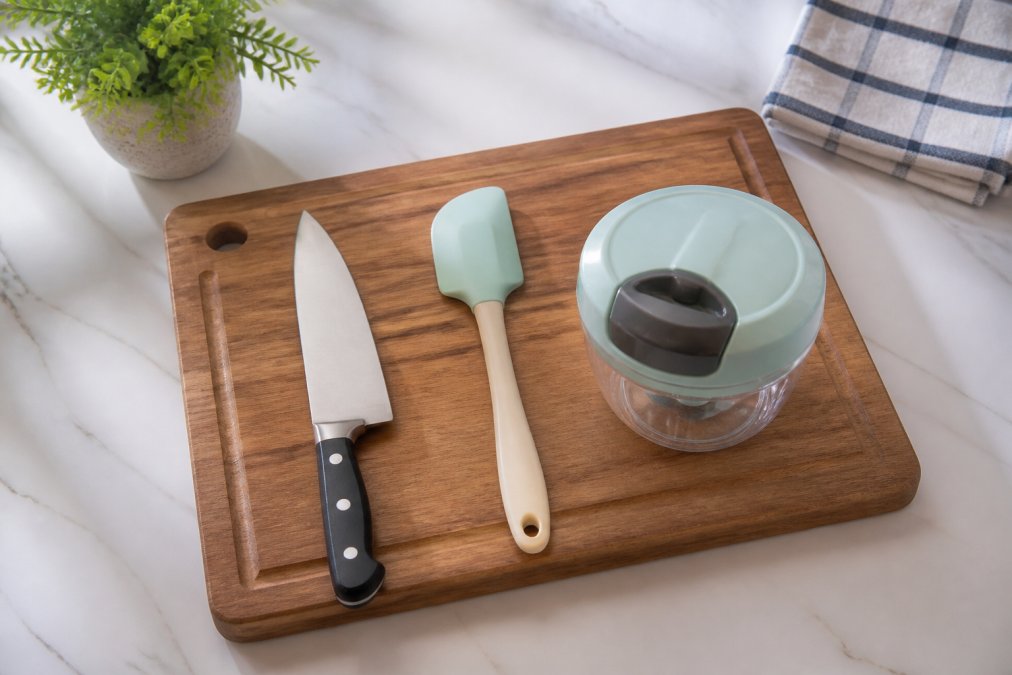
Chef's Knife and Cutting Board
A chef's knife is the single most important tool in any kitchen. A quality 8-inch chef's knife handles dicing, mincing, slicing, and breaking down proteins, roughly 90% of prep work. The blade should feel balanced in your hand, with weight distributed evenly between blade and handle.
For cutting boards, hardwood and thick plastic are the two practical choices. Hardwood boards are gentler on knife edges and resist bacterial absorption when maintained properly, according to cutting board safety research from the University of California Cooperative Extension. Plastic boards are dishwasher safe and easier to sanitize after raw meat contact. A cutting board smaller than 12 x 18 inches creates constant frustration when prepping larger vegetables.
Cutting and Prep Essentials at a Glance:
| Tool | Primary Use | Key Feature | Best For |
|---|---|---|---|
| 8-inch Chef's Knife | Dicing, mincing, slicing | Balanced weight, sharp edge | All daily prep tasks |
| Hardwood Cutting Board | General prep | Gentle on knife edges | Vegetables, bread, herbs |
| Plastic Cutting Board | Raw meat prep | Dishwasher safe, sanitizable | Protein handling |
| Hand Chopper | Rapid dicing | Stainless steel blades | Onions, garlic, soft veg |
Vegetable Chopper, Grater, and Peeler
The CrispNest Vegetable Fruit Salad Onion Garlic Food Hand Chopper Cutter Slicer Peeler Dicer ($13.72) is the most underrated prep tool for busy cooks. The stainless steel blades handle onions, garlic, and soft vegetables with a single press, requiring no knife skills and producing no tears.
For grating, a box grater with multiple sides covers hard cheeses, citrus zesting, and fine shredding. A Y-peeler outperforms a straight peeler for most home cooks, reducing wrist strain during extended peeling sessions.
Cookware Essentials: Pots, Pans, and Specialty Pieces
Most home cooks own too many pans and not enough of the right ones. A well-chosen cookware set covers sautéing, searing, braising, boiling, and baking without duplicating function.
Cast Iron and Non-Stick Pans
Cast iron is the best long-term cookware investment available. The CrispNest Cast Iron 5 Hole Egg Frying Pan ($59.36) demonstrates what cast iron does well: fast, even heat distribution, a thick bottom that retains heat through temperature fluctuations, and compatibility with gas stoves and induction cookers. The five-hole design lets you cook multiple eggs simultaneously.
For cooks with limited wrist strength, a lighter non-stick pan handles daily eggs and delicate fish without physical demand. The practical approach: own one cast iron pan for high-heat searing and breakfast, one non-stick for eggs and fish, and one stainless steel sauté pan for acidic sauces.
Pressure Cooker and Multi-Function Appliances
The CrispNest 12Qt Stainless Steel Pressure Cooker ($159.64) is the right tool for anyone who cooks dried beans, tough cuts of meat, or large-batch soups. Three pressure settings, a steaming rack, and a tempered glass lid make it versatile across protein types, grains, and canning applications.
The Bluebow 12Qt Air Fryer Oven ($60.00) air fries, bakes, roasts, broils, toasts, and dehydrates in one appliance, replacing three or four separate countertop tools. For small-space kitchens, that consolidation is the real value.

Spatulas, Turners, and Everyday Utensil Sets
A complete utensil set purchased upfront costs less than assembling pieces separately and ensures you have the right tool for every task.
CrispNest offers three strong options:
1. 14-Piece Silicone Kitchen Utensils Set ($26.04) The most complete set. Includes turner, tongs, spatula, soup spoon, pastry brush, whisk, pasta server, colander, and more. Wooden handles stay cool during cooking. Silicone tips are heat resistant to 446°F and won't scratch non-stick cookware.
2. 12-Piece Silicone Utensils Set ($26.88) Nearly identical in function with a slightly different tool selection. Both sets feature wooden handles with hanging loops for easy storage.
3. 6-Piece Teak Wooden Utensils Set ($32.00) The right choice if you prefer natural materials and a minimal aesthetic. Teak wood is naturally heat resistant and gentle on non-stick surfaces.
4. 7-Piece Stainless Steel Silicone Set ($15.58) The budget entry point. 304 stainless steel construction with silicone accents covers core tasks.
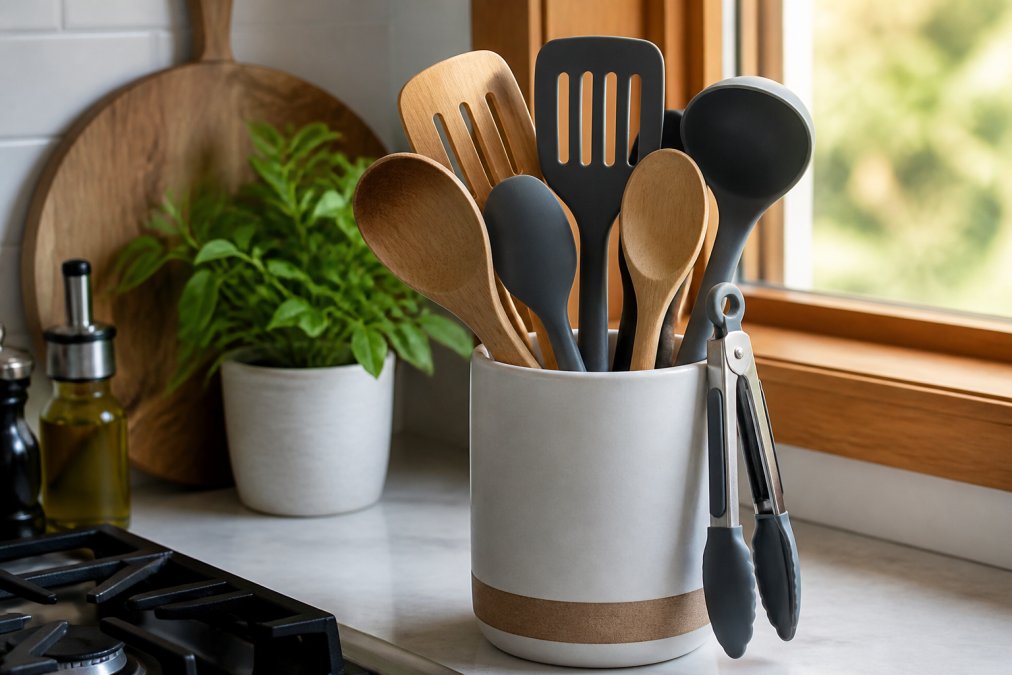
A wooden spoon and a silicone spatula earn daily use in almost every kitchen. The wooden spoon handles stirring, scraping fond, and mixing without scratching cookware. The silicone spatula folds, scrapes, and flips with precision that metal turners can't match on delicate surfaces.
Must-Have Kitchen Gadgets for Home Chefs
The best kitchen gadgets solve a specific problem better than any general-purpose tool can. Three gadgets that consistently earn their counter space: an immersion blender (pureeing soups directly in the pot), a kitchen scale (precision baking requires weight measurements), and the CrispNest Electric Egg Cooker ($26.98), which cooks up to seven eggs in 10 to 15 minutes with auto-shutoff.

The 6L Electric Hot Pot with Divider ($129.08) serves 3 to 6 people with five adjustable temperature settings and a divided cooking surface.
A bench scraper is one of the most overlooked gadgets. Professional cooks use it constantly for transferring diced vegetables, cleaning cutting boards, and portioning dough. It costs almost nothing and earns daily use.
Essential Kitchen Tools for Beginners: Where to Start
Essential kitchen tools for beginners should cover every core cooking task without overwhelming a new cook with options.
Start with this foundation:
- Chef's knife (8-inch), handles 90% of all cutting tasks
- Cutting board (at least 12 x 18 inches), wood or thick plastic
- One silicone utensil set (12 or 14 pieces covers everything)
- One non-stick pan (10 or 12 inches), for eggs, fish, and delicate proteins
- One stainless steel or cast iron pan, for searing and high-heat cooking
- One medium saucepan (3-quart), for sauces, grains, and blanching
- One large stockpot (8-quart), for pasta, soups, and batch cooking
- Colander, for draining pasta and rinsing produce
- Mixing bowls (set of three nested sizes)
- Kitchen scale, especially important for baking
This starter kit covers daily cooking for one to four people across virtually every recipe type. According to culinary education resources from the Culinary Institute of America, mastering a small number of core techniques with quality tools produces better results than owning an extensive collection of specialized equipment.
How to Organize Kitchen Utensils in Any Space
Knowing how to organize kitchen utensils effectively is the difference between a kitchen you enjoy cooking in and one you avoid. Store tools where you use them: utensils used at the stove go near the stove, prep tools near the cutting board, baking tools near the oven.
For standard kitchens with adequate drawer space: Use drawer dividers to separate utensils by function. Keep the top drawer nearest the stove reserved for daily-use tools.
For small-space kitchens: A countertop utensil holder or ceramic crock near the stove keeps daily tools accessible. Magnetic knife strips mount to walls and free up drawer space. Hanging pot racks recover cabinet space. Nested mixing bowls, stackable measuring cups, and collapsible colanders reduce footprint.
The hanging loops on CrispNest's silicone and wooden utensil sets are designed for space-conscious storage. Hook them on a rail or peg board and your most-used tools are visible and within reach.
For apartment kitchens with minimal storage: A single countertop crock holding your five to seven most-used utensils is more functional than an overstuffed drawer. Edit ruthlessly: if you haven't reached for a tool in three months, store it out of the kitchen or donate it.
Choosing Kitchen Tools That Last: Maintenance and Material Guide
The right maintenance habits extend the life of kitchen tools by years. Quality materials respond well to proper care.
Silicone utensils: Silicone tips are dishwasher safe and heat resistant to 446°F. Avoid cutting on silicone surfaces or using silicone tools against sharp metal edges. Wooden handles should be hand-washed and dried immediately; prolonged water exposure causes cracking.
Cast iron cookware: Cast iron requires seasoning, a thin layer of polymerized oil that creates its non-stick properties. After each use, rinse with hot water, dry thoroughly on the stove over low heat, and apply a light coat of neutral oil. The cast iron care guidance from Lodge Cast Iron recommends re-seasoning in the oven at 450°F for one hour when the surface appears dull.
Stainless steel: Stainless steel is the most forgiving material in the kitchen. Dishwasher safe, resistant to rust and corrosion, and unaffected by acidic foods. Preheat before adding oil to prevent sticking.
Wooden utensils: Hand-wash only, dry immediately, and condition with food-grade mineral oil every few months. Never soak wooden utensils in water or put them in the dishwasher. Teak is naturally high in silica and oil content, making it more resistant to moisture and warping.
Knives: A sharp knife is safer than a dull one. Hand-wash and dry immediately after use; the dishwasher dulls edges and damages handles. Hone the blade with a honing steel before each use, and sharpen with a whetstone every few months.
| Material | Dishwasher Safe | Lifespan with Care | Key Maintenance Step |
|---|---|---|---|
| Food-grade silicone | Yes | 5-10 years | Avoid sharp edges; hand-wash wooden handles |
| Cast iron | No | Decades | Season after each use; dry thoroughly |
| Stainless steel | Yes | 10+ years | Preheat before oil; avoid abrasive scrubbers |
| Teak wood | No | 5-10 years | Hand-wash, dry immediately, oil quarterly |
| High-carbon steel knife | No | Decades | Hone before use, sharpen monthly, dry immediately |
Buying durable materials, cast iron, stainless steel, hardwood, reduces the cycle of replacement that cheaper tools demand. The sustainable kitchen practices overview from the Environmental Protection Agency supports durable goods purchasing as a core strategy for reducing household waste.
Frequently Asked Questions
What is the most common kitchen tool chefs use every day?
A chef's knife tops the list for almost every cook. It handles dicing, mincing, slicing, and chopping across nearly every recipe. After that, a silicone spatula and a pair of tongs cover the widest range of daily tasks, from sautéing vegetables to flipping proteins. If you only buy three tools, those are the ones that earn their place on the counter every single day.
What are the most versatile kitchen tools for small kitchens?
Tools that do more than one job are essential when storage is limited. A hand chopper handles slicing, dicing, and mincing without needing multiple gadgets. A silicone utensil set covers stirring, serving, and flipping in one compact package. A multi-function air fryer oven replaces a toaster, roaster, and dehydrator. Prioritizing multi-use culinary equipment means fewer items taking up space and less clutter in your mise en place setup.
What should every home cook have in their kitchen starter kit?
A solid starter kit covers prep, cooking, and serving. Start with a chef's knife, a cutting board, and a colander for basic prep work. Add a non-stick or cast iron pan for everyday sautéing and frying. A silicone utensil set handles stirring, flipping, and serving. Round it out with a kitchen scale for precision and a wooden spoon for heat-resistant mixing. These kitchen essentials cover roughly 90% of daily recipes without overcrowding your drawers.
How do you choose high-quality kitchen tools that actually last?
Focus on material and construction first. Stainless steel cookware and food-grade silicone utensils resist corrosion and hold up to high heat without warping. Cast iron pans, when seasoned properly, last decades. For handles, look for ergonomic designs that stay cool and feel secure. Check whether items are dishwasher safe if that matters to your routine. Durability comes from material quality, not price alone, so compare specifications before buying.
Which kitchen utensils are essential for healthy daily cooking?
Healthy cooking relies on tools that support low-oil and whole-food preparation. A kitchen scale promotes portion precision. Silicone spatulas and wooden spoons work with non-stick cookware, so you need less oil when sautéing. A colander and salad spinner make rinsing produce fast and easy. A pressure cooker cuts cooking time for beans, grains, and lean proteins without added fat. These utensils make nutritious meal prep practical rather than time-consuming.
Building a functional kitchen doesn't require buying everything at once. Start with a quality knife, a versatile utensil set, and one or two reliable pans, then add specialty tools as your cooking expands. CrispNest's kitchen collection is designed for exactly this approach: thoughtfully selected tools that deliver daily performance without unnecessary duplication. Browse the full range and add the essentials to your cart today.
This article was written using GrandRanker


