
Table of Contents
- What Makes High-Performance Home Fitness Gear Worth the Investment
- Best Home Gym Equipment for Small Spaces
- Durable Home Gym Essentials That Last
- How to Choose the Right Fitness Gear for Your Space
- Home Gym Maintenance Tips for Long-Term Performance
- Building Your Complete Home Fitness Setup
- New vs. Used Home Gym Equipment: What to Consider
- Conclusion
Last Updated: August 28, 2026
What Makes High-Performance Home Fitness Gear Worth the Investment
Building a home gym means selecting pieces that deliver measurable results while fitting your space, budget, and training style. High-performance home fitness gear combines durability, versatility, and smart design to support everything from strength training to functional conditioning without requiring a commercial gym membership.
The real value lies in consistency. Equipment that integrates seamlessly into your routine compounds over time. At CrispNest, we've curated premium fitness essentials that bridge this gap, products selected for build quality, training versatility, and longevity rather than flashy features.
What separates worthwhile equipment from expensive clutter comes down to three factors: does it match your actual training goals, does it fit your physical space, and will it perform reliably after two years of regular use? These determine whether you'll use the equipment consistently or abandon it after novelty wears off.
The investment in high-performance gear pays dividends through progressive overload. Quality equipment supports progressive training without forced upgrades. A solid adjustable dumbbell system or power rack becomes foundational rather than obsolete.
Best Home Gym Equipment for Small Spaces
Space constraints force clarity. Every piece must earn its footprint through training versatility and durability.
Adjustable Dumbbells and Weight Systems
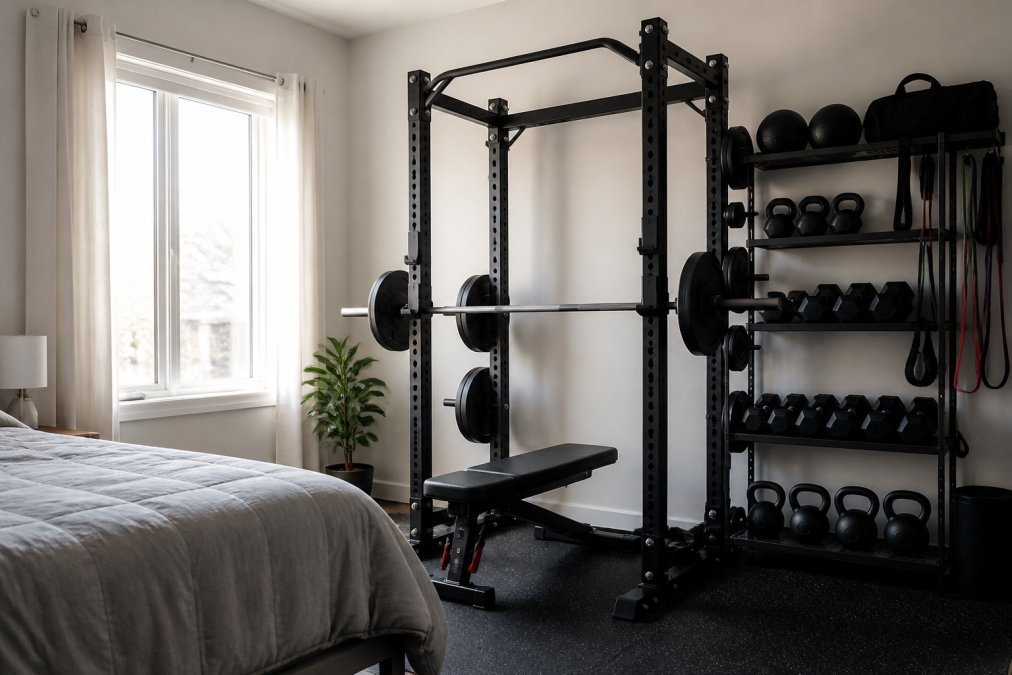
Adjustable dumbbells represent the highest training-to-footprint ratio available. A single adjustable dumbbell system replaces 15-20 traditional dumbbells while occupying roughly the space of two standard dumbbells side by side (peer-reviewed research).
The biomechanics work identically to fixed weights. Load selection happens through pin adjustment or dial mechanism rather than plate loading, maintaining proper form throughout the entire range of motion.
Setup typically takes under five minutes with minimal assembly. Most systems include a compact stand, keeping dumbbells organized without sprawling across your floor.
Weight capacity matters more than expected. Look for systems offering 5-pound increments at lower weights (5 to 50 pounds) and 10-pound jumps at higher weights. This granularity supports progressive overload, the fundamental principle of strength and conditioning.
Multi-Functional Power Racks
A power rack functions as the backbone of a complete strength training setup. It accommodates barbell exercises, supports progressive overload with weight plates, and provides safety features that enable solo training without spotters.
The footprint typically runs 48 inches wide by 48 inches deep, roughly equivalent to a small dining table. This containment makes power racks viable in modest spaces with careful layout planning.
Build quality determines longevity. Commercial-grade power racks use 11-gauge steel or thicker, rated for 1,000+ pounds of static weight capacity (astm.org). This specification indicates structural rigidity. Thinner steel may cost less initially but requires replacement sooner.
Safety features aren't optional. Adjustable safety bars or pins prevent failed lifts from becoming injuries. The ability to set these at appropriate heights for each exercise transforms a power rack into a training partner that enables progressive training.
Durable Home Gym Essentials That Last
Equipment failure happens predictably. Rust develops on unprotected steel. Welds crack under cyclic stress. Cables fray. Understanding failure patterns helps you select gear that avoids common breakpoints.
Build Quality and Weight Capacity
Weight capacity functions as a durability proxy. A 500-pound-rated system incorporates heavier gauge steel and stronger welds than a 300-pound-rated equivalent, absorbing the stress of progressive overload and repeated use cycles.
Material composition matters equally. Steel rusts without protection. Stainless steel resists corrosion but costs significantly more. Most quality equipment uses powder-coated steel, providing rust resistance while keeping costs reasonable. Inspect the coating for completeness, as any bare steel will oxidize first.
Adjustment mechanisms represent the most failure-prone component. Pin-based adjustments fail when pins bend or holes strip. Dial-based systems fail when internal mechanisms jam from dust or sweat. Look for sealed mechanisms or simple, strong designs with fewer failure points.
Cables and pulleys on functional training equipment require inspection. Fraying indicates poor quality or inadequate protection. Smooth cable wrapping suggests manufacturing attention. Pulley bearings should spin freely without grinding sounds.
Warranty Coverage and Longevity
Warranty terms reveal manufacturer confidence. A five-year structural warranty suggests the manufacturer expects that lifespan minimum. A one-year warranty signals planned obsolescence or low confidence in build quality.
Read warranty language carefully. Does it cover rust? Powder coat failure? Mechanical wear? Some warranties cover structural failure only, leaving you responsible for maintenance-related issues.
Longevity requires active maintenance. Steel equipment needs occasional cleaning and inspection for rust development. Cables need visual inspection for fraying. Moving parts benefit from occasional lubrication.
The real measure of durability is whether replacement parts remain available. Can you order a replacement cable in year three? A new pulley bearing in year five? Equipment with standardized components ensures you can maintain it indefinitely rather than replacing entire systems.
How to Choose the Right Fitness Gear for Your Space
Equipment selection without space planning leads to regret. A power rack that fits dimensions might block a doorway. Cardio machines positioned poorly create acoustic problems for neighbors.
Measuring Your Footprint and Layout
Start with precise measurements. Use a tape measure for length, width, and ceiling height. Note doorway dimensions and identify fixed obstacles: HVAC units, water heaters, electrical panels, windows.
Create a scaled floor plan using graph paper or digital tools. This visualization catches problems before purchase and identifies clearance issues and layout inefficiencies.
Account for movement space. A power rack requires clearance in front for loading weight plates. Dumbbells need space for overhead pressing and lateral movements. Cardio machines require clearance behind for maintenance access.
Vertical space matters differently for different equipment. Power racks require 8-foot ceilings minimum for barbell exercises (nsca.com). Adjustable dumbbells need minimal vertical clearance. Cardio machines typically fit under standard ceiling heights.
Matching Equipment to Your Training Goals
Equipment selection should reflect your actual training priorities, not aspirational ones. If you genuinely enjoy strength training, invest in a power rack and barbell system. If cardio dominates your routine, prioritize a quality treadmill or rowing machine. If functional training interests you, focus on resistance training equipment with cable pulley systems.
This alignment prevents overinvesting in equipment you won't use. Honest assessment of your training preferences drives better purchasing decisions than generic "complete home gym" packages.
Progressive overload determines equipment needs. Strength training requires the ability to increase load incrementally through adjustable dumbbells or barbell plates. Cardio training requires adjustable intensity through speed or resistance. Functional training requires versatile movement options.
Training frequency influences durability needs. Equipment used five days weekly faces different stress than equipment used twice weekly. Higher-frequency training justifies investment in premium build quality. Lower-frequency training can accept slightly lower specifications.
Home Gym Maintenance Tips for Long-Term Performance
Maintenance separates equipment lasting five years from equipment lasting fifteen. Most failures result from neglect rather than manufacturing defects. A simple maintenance routine extends equipment life dramatically.
Cleaning and Rust Prevention
Sweat accelerates rust development on unprotected steel. Wipe down equipment after training sessions, particularly areas where sweat accumulates. A quick microfiber cloth pass takes 60 seconds and prevents corrosion from taking hold.
Inspect for rust development monthly. Early-stage rust appears as small discolored spots. Address these immediately with a wire brush and touch-up paint or rust converter.
Store equipment in a climate-controlled space when possible. Basements and garages in humid climates create rust-friendly environments. Dehumidifiers reduce moisture that accelerates oxidation. Prioritize stainless steel or heavily coated equipment in humid climates.
Moving parts require occasional attention. Cable pulleys benefit from light machine oil applied sparingly. Adjustment mechanisms on dumbbells work better when kept clean and dry. Barbell sleeves spin more smoothly with occasional lubrication.
Floor Protection and Acoustic Dampening
Dropping weights damages floors and disturbs neighbors or family members. Rubber flooring under equipment protects underlying floors while dampening impact noise. Interlocking rubber tiles work well for defined equipment zones.
Acoustic dampening improves the training environment. Isolation pads under equipment feet reduce vibration transfer to spaces below. These basic rubber pads cost under ten dollars per set but noticeably reduce noise transmission.
Floor protection also simplifies cleaning. Rubber flooring prevents sweat from damaging wood or tile. Spilled water doesn't seep into cracks.
Consider your living situation when planning acoustic solutions. Apartment dwellers need more aggressive dampening than homeowners with dedicated basement spaces.
Building Your Complete Home Fitness Setup
A complete setup balances strength training, cardiovascular conditioning, and functional training capacity. Build progressively to learn what equipment actually fits your training style before investing heavily.
Strength and Conditioning Essentials
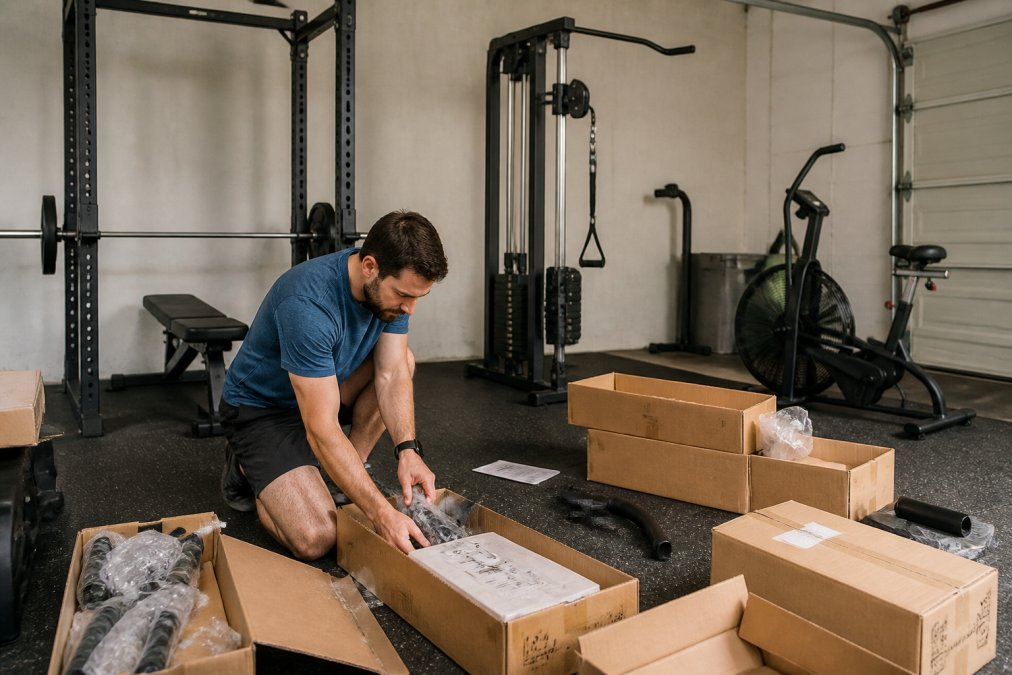
Start with adjustable dumbbells and a power rack. These two components support the majority of strength training exercises. Dumbbells provide flexibility for single-arm work and lighter loads. A power rack supports barbell exercises and provides safety for heavy lifting.
Add weight plates and a barbell once committed to barbell training. A standard Olympic barbell weighs 45 pounds and accepts standard plates. Quality barbells use medium-knurl that works for most lifts without shredding hands.
Strength and conditioning training benefits from adjustable bench options. A simple flat bench serves most purposes. An adjustable incline bench adds exercise variety without requiring additional space.
Resistance bands complement barbell and dumbbell training. They're inexpensive, require minimal storage, and provide variable resistance throughout movement ranges. Heavy resistance bands enable accommodating resistance patterns, adding load at the top of movements where you're strongest.
Cardio and Functional Training Additions
Add cardio equipment once strength training is established. Rowing machines provide full-body conditioning with low impact. Treadmills offer accessible cardio for runners. Stationary bikes work well for lower-body-focused conditioning. Choose based on your preference, as consistency matters more than equipment type.
Functional training equipment includes cable pulley systems, suspension trainers, and medicine balls. Cable systems enable resistance training through multiple planes of motion. Suspension trainers require minimal space while enabling hundreds of exercises. Medicine balls add explosive training options for power development.
Kettlebells bridge strength and conditioning. They enable ballistic movements like swings and cleans that build explosive power and cardiovascular capacity simultaneously while occupying minimal space.
Start with adjustable dumbbells and a power rack. Add cardio equipment when ready. Integrate functional training tools gradually. This approach lets you learn your actual preferences before committing significant investment.
New vs. Used Home Gym Equipment: What to Consider
Used equipment costs significantly less than new alternatives but introduces risk. Understanding what to inspect informs smart purchasing decisions.
Inspect used equipment carefully. Check for rust on weight plates and barbells. Look for cracks in welds on racks and frames. Test adjustment mechanisms on dumbbells for smooth operation. Listen for unusual sounds when operating equipment.
Cable-based equipment ages unpredictably. Cables fray and break. Pulleys wear out. Replacement costs often approach or exceed the value of used equipment. Avoid cable-heavy equipment unless you can verify recent cable replacement.
Weight plates and barbells age well. Steel doesn't degrade functionally. Rust is cosmetic on plates and bars unless severe enough to affect dimensions. A used barbell with surface rust works identically to a new one after cleaning.
Dumbbells hold value well if mechanisms function. Test adjustment systems thoroughly. Pin-based systems that stick indicate internal wear. Dial systems that click unevenly suggest stripped internal components.
Power racks and simple frames age gracefully. Inspect welds for cracks. Check that adjustment holes align properly. Look for significant bending or deformation.
Document everything when buying used. Get the seller's contact information and warranty details. Photograph the equipment in its current condition. Understand return policies before transport.
The cost savings from used equipment can be substantial, often 40-60% below new prices. This makes sense for equipment you're testing or secondary pieces. For core equipment used regularly, new equipment with warranty coverage often provides better long-term value.
Choosing high-performance home fitness gear comes down to matching equipment to your actual training style, measuring your space carefully, and prioritizing build quality over flashy features. CrispNest has curated premium fitness essentials that deliver on durability and performance, equipment selected for real-world training rather than marketing appeal. Start with adjustable dumbbells and a quality power rack, maintain them consistently, and expand progressively based on your evolving training needs. The investment in thoughtfully selected equipment compounds through years of reliable performance and consistent training.
Frequently Asked Questions
What is the best high-performance home fitness gear for beginners?
Start with adjustable dumbbells, a power rack, and a bench for strength training. These three pieces provide versatility for full-body workouts and progressive overload as you build strength. Add cardio equipment like a rowing machine or treadmill once you establish your routine. Focus on build quality and weight capacity rather than buying many pieces at once. Quality equipment you'll actually use beats a cluttered garage of unused gear.
What makes durable home gym essentials different from budget options?
Durable equipment uses commercial-grade materials, higher weight capacity ratings, and better engineering. Premium dumbbells have consistent knurling for grip, while budget options wear quickly. Quality power racks have thicker steel and precise welds. Check warranty coverage, typically 5-10 years for durable gear versus 1-2 years for budget brands. Read reviews about long-term performance, not just initial feel. Investing in durability means your equipment supports progressive overload for years without degradation.
How do I know if high-performance home fitness gear will fit my space?
Measure your available footprint first, accounting for movement space around equipment. A power rack needs clearance above for overhead exercises. Treadmills and rowing machines require more depth than width. Multi-station gyms save space but have larger footprints. Consider vertical storage for dumbbells and plates. Adjustable equipment like folding benches or wall-mounted pull-up bars maximize space efficiency. Visit a gym or showroom to see equipment dimensions in person before buying, or request detailed specifications from retailers like CrispNest.
This article was written using GrandRanker


