
Table of Contents
- The Real Cost of Expensive Kitchen Gadgets
- Best Kitchen Tools for Daily Cooking That Justify the Price
- Essential vs Luxury Kitchen Gadgets: Where to Draw the Line
- How to Maintain Premium Kitchenware for Long-Term Value
- Cost-Per-Use Analysis: When Expensive Kitchen Gadgets Make Sense
- Hidden Costs of Ownership and Storage Considerations
- Building Your Kitchen Investment Strategy
Last Updated: August 29, 2026
The Real Cost of Expensive Kitchen Gadgets
When deciding whether expensive kitchen gadgets justify their investment, the math depends on your actual cooking habits. At CrispNest, we've seen customers transform their routines with premium tools, while others watch expensive gadgets collect dust. The difference isn't the tool itself, but matching the investment to your cooking frequency and workflow.
Expensive kitchen gadgets offer consistency, durability, and refined cooking experiences that budget alternatives don't. A premium air fryer oven handles different foods more evenly. A quality pressure cooker maintains stable pressure without fluctuations affecting cooking times. These differences matter when you cook multiple times per week.

The real question isn't whether expensive kitchen gadgets are universally worth it, they're not for everyone. The question is whether they're worth it for your specific situation.

Best Kitchen Tools for Daily Cooking That Justify the Price
The tools most worth upgrading are ones you use almost every day, investment pieces you'll rely on for five to ten years.
A premium air fryer oven is a clear example. If you cook for a family regularly, the Bluebow 12Qt Air Fryer Oven delivers capacity and consistent results that justify its price. With 12-quart capacity, it handles whole chickens, multiple vegetable batches, and baked goods without crowding (the FDA). Even heat distribution eliminates rotating trays or dealing with hot spots. For someone cooking four or more times per week, this tool pays for itself through reduced food waste and faster meal preparation.
Pressure cookers represent another category where premium construction matters. A quality stainless steel pressure cooker like the 12Qt Pressure Cooker with three pressure settings handles beans, tough cuts of meat, and complex soups with reliable, predictable results. The tempered glass lid lets you monitor cooking without releasing pressure. Budget pressure cookers often have inconsistent sealing or pressure fluctuations that affect cooking times unpredictably.

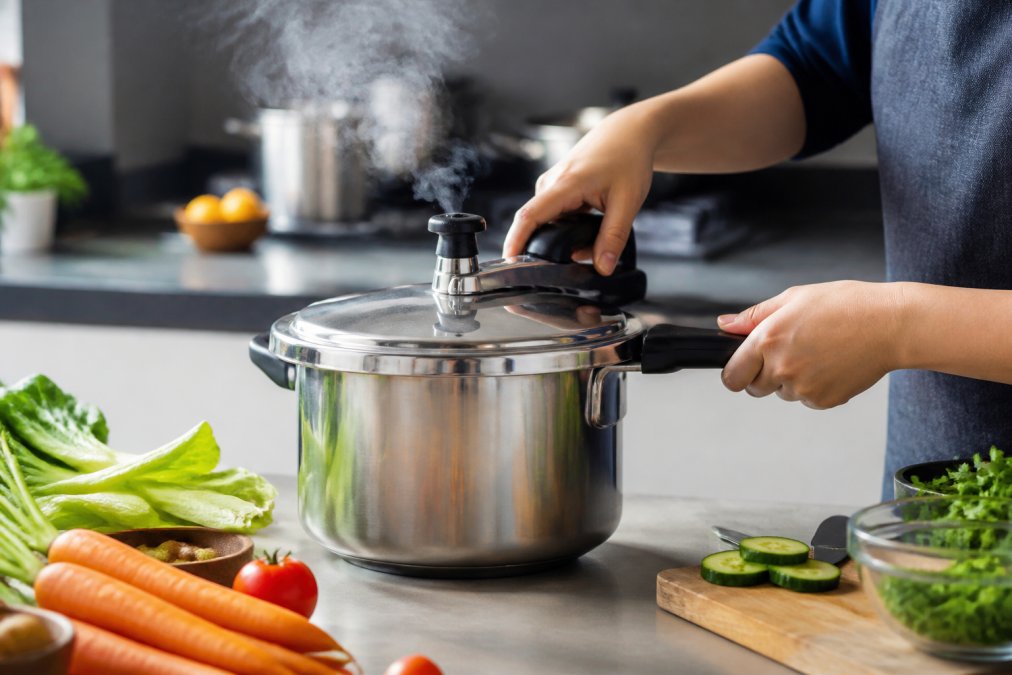
A single quality chef's knife used daily outlasts five cheap ones, with noticeable performance differences every time you cut. The same logic applies to modern kitchen gadgets: tools you touch regularly, tools that affect output quality, and tools handling high-volume use deliver measurable benefits when premium.
Essential vs Luxury Kitchen Gadgets: Where to Draw the Line
The line between essential and luxury isn't about function, it's about how central the tool is to your cooking routine.
Essential tools solve real problems in your workflow. A quality cutting board prevents knife sliding. A reliable thermometer prevents overcooked meat. A good colander drains pasta efficiently. These essentials don't need to be expensive, but they need to work reliably every time.
Luxury gadgets solve problems you didn't know you had or solve existing problems more elegantly. An electric egg cooker is technically luxury, you can boil eggs in a pot. But if you're boiling eggs multiple times per week, the 1Pc Electric Egg Cooker for Daily Breakfast Preparation eliminates guesswork and frees your stovetop. For regular use, this shifts from luxury to essential.
A 6L Electric Hot Pot with divider is luxury if you cook hot pot once yearly, but essential if you enjoy hot pot dinners twice monthly, the convenience and consistent temperature control become central to your experience.

Before buying an expensive kitchen gadget, ask: "Will I use this more than once per month?" If no, it's probably luxury. If yes, consider whether a simpler or cheaper alternative solves the same problem.
How to Maintain Premium Kitchenware for Long-Term Value
Premium kitchenware only justifies its cost if you maintain it properly. This is where many people fail, they invest in quality tools and maintain them like cheap ones.
Stainless steel tools need regular attention. Hand-washing is almost always better than the dishwasher. Dishwashers expose stainless steel to harsh detergents and high heat causing discoloration and pitting (the CDC). A quick hand-wash with warm soapy water takes two minutes and preserves the finish for years.
Pressure cookers have specific maintenance requirements. The sealing ring needs cleaning after every use and regular inspection for cracks or elasticity loss. Many people ignore this, then wonder why their cooker stops working. Replacing a sealing ring costs a few dollars; replacing an entire cooker costs over a hundred.
Air fryer ovens need their heating elements and interior surfaces kept clean. Grease buildup reduces efficiency and can eventually cause problems. Most models have removable baskets and trays that should be washed regularly. Checking your model's manual for maintenance recommendations takes five minutes and prevents most common issues.
Maintenance costs are usually minimal. A tool maintained regularly will work reliably for a decade; the same tool neglected will fail within a few years, making the premium price feel wasted.
Cost-Per-Use Analysis: When Expensive Kitchen Gadgets Make Sense
Cost-per-use is the clearest way to evaluate whether expensive kitchen gadgets make financial sense.
Divide the price by the number of times you'll use it over its lifespan. A $160 pressure cooker used twice per week for five years equals roughly 520 uses, about 31 cents per use (peer-reviewed research). A $40 pressure cooker used the same amount might seem cheaper until it fails after two years (260 uses), bringing its cost-per-use to 15 cents, but you've now bought two cookers.
Premium tools often have lower total cost-of-use because they last longer and maintain performance. A budget air fryer costing $60 might last two years with degrading performance. A premium air fryer costing $150 might last seven years with consistent performance. If you use it four times per week, the budget model costs roughly 4 cents per use over two years, while the premium model costs about 10 cents per use over seven years, but you avoid replacing the budget model multiple times.
This analysis only works if you're honest about actual usage. Many people overestimate how often they'll use a tool, buy based on that vision, then use it half as often as expected.
The variables that matter most are:
- Actual frequency of use (not hoped-for frequency)
- Expected lifespan (research this before buying)
- Cost of failure (can you replace it, or is it irreplaceable?)
- Performance degradation (does it work as well in year five as year one?)
For tools you'll use frequently, premium versions almost always win the cost-per-use calculation.
Hidden Costs of Ownership and Storage Considerations
The price tag on expensive kitchen gadgets doesn't tell the full story. Hidden costs accumulate over time.
Storage space is the first hidden cost. Every gadget occupies real estate on your counter, in cabinets, or pantry. In smaller homes, this space is genuinely valuable. A gadget sitting unused in a cabinet isn't just a wasted purchase, it prevents storing something you actually use. Before buying, identify exactly where it will live.
Electricity consumption is another hidden cost. Some premium gadgets use more power because they heat faster or maintain consistent temperatures. An air fryer running 300 times yearly costs roughly $8-12 in electricity annually. Over five years, these costs add up.
Replacement parts represent another layer. A premium pressure cooker with a failed sealing ring might cost $10-20 to repair. Budget models often have unavailable parts or costs nearly matching a new appliance. Research whether replacement parts are readily available and reasonably priced.
Learning curve time has hidden cost too. Complex gadgets require reading manuals and experimenting. A gadget sitting unused because it's too complicated isn't delivering value, regardless of quality.
Some premium brands offer better customer support, reducing the hidden cost of problems. Budget brands often have minimal support, leaving you to troubleshoot alone.
Building Your Kitchen Investment Strategy
Creating a kitchen investment strategy means deciding which tools deserve premium investment.
Start by auditing your actual cooking patterns. What do you cook most often? How many times per week do you cook at home? What problems frustrate you most? These answers determine which tools would genuinely improve your life.
Categorize your kitchen tools into three groups: daily-use tools (your investment pieces), weekly-use tools (reliable and reasonably priced), and occasional-use tools (affordable and simple).
CrispNest's approach reflects this philosophy. The Bluebow air fryer and quality pressure cookers are designed for regular use, becoming central to your cooking routine. Simpler tools like the electric egg cooker are affordable because they solve specific problems without unnecessary complexity.
Build your kitchen gradually rather than all at once. Invest in one premium tool, use it extensively, understand its strengths and limitations, then decide what to add next. This prevents accumulating expensive kitchen gadgets you don't actually use.
Consider your kitchen's actual constraints. Limited counter space means prioritizing multi-functional tools. Limited storage means choosing tools with smaller footprints. Limited budget means focusing premium investment on the one or two tools you'll use most frequently.
The goal isn't having the most impressive kitchen or most tools. The goal is having the right tools for your cooking style, used frequently enough to justify their cost, and maintained well enough to last for years.
The decision to invest in expensive kitchen gadgets ultimately comes down to honest self-assessment. If you cook regularly, value consistent results, and have identified specific tools that would improve your workflow, premium quality almost always makes sense. If you're buying based on aspiration rather than actual usage patterns, the premium price tag isn't justified.
CrispNest specializes in thoughtfully selected premium kitchen tools designed for people who cook regularly and value durability. Our curated selection includes products like the Bluebow 12Qt Air Fryer Oven and quality pressure cookers that deliver consistent performance over years of regular use. Whether you're upgrading your kitchen or building it from scratch, investing in tools that match your actual cooking habits ensures genuine value from every dollar spent. Add to cart and start building a kitchen that works as hard as you do.
Frequently Asked Questions
Q: Which kitchen gadgets are actually worth the money?
A: Kitchen gadgets worth investing in are those you'll use at least 2-3 times per week. High-capacity tools like air fryer ovens and pressure cookers deliver consistent value because they replace multiple single-function appliances. The Bluebow 12Qt Air Fryer Oven ($60.00) and 12Qt Pressure Cooker ($159.64) justify their cost through durability and how they streamline meal prep for families or frequent home cooks.
Q: How do you distinguish between luxury gadgets and marketing gimmicks?
A: Real value lies in build quality, and specific performance improvements. Look for stainless steel construction, multiple cooking functions, and clear customer testimonials about longevity. Avoid single-use gadgets marketed as 'essential.' Ask yourself: does this replace something I already own, or does it solve a genuine cooking problem I face regularly?
Q: Is it worth buying high-end kitchen appliances for a home kitchen?
A: Yes, if you cook regularly and have the counter space. Premium appliances reduce cooking time, deliver consistent results, and last longer than budget models. Calculate cost-per-use: a $159.64 pressure cooker used 3 times weekly over 5 years costs roughly $0.41 per use. Budget alternatives cost less upfront but may fail faster, erasing savings quickly.
Q: What's the most useful kitchen gadget for home cooks?
A: Multi-functional tools offer the best value. Air fryer ovens handle roasting, baking, air frying, and reheating in one appliance. Pressure cookers reduce cooking time for beans, meats, and soups. Electric hot pots enable quick meal prep for families. These three replace multiple single-function gadgets, save counter space, and see weekly use in most households.
This article was written using GrandRanker


