
Table of Contents
- Best Travel Friendly Lifestyle Products: What Matters Most
- Best Travel Friendly Beauty Essentials 2026
- Space-Saving Travel Accessories That Actually Work
- Reusable Toiletry Containers and Sustainable Hydration
- Minimalist Packing List for Travelers
- Budget-Friendly DIY Eco-Swaps for Travel
- Calculating Carbon Footprint of Travel Gear
- Conclusion: Choose Quality That Lasts
- Frequently Asked Questions
Best Travel Friendly Lifestyle Products: What Matters Most
Packing efficiently doesn't mean sacrificing quality or sustainability. The best travel friendly lifestyle products combine durability, minimal weight, and thoughtful design, the kind of gear that works harder because it's built to last. At CrispNest, we've curated essentials that transform how you travel, whether you're crossing time zones for work or exploring new destinations for weeks at a time.
The challenge most travelers face is simple: carry less, use more. Standard travel gear often forces a choice between functionality and space. Bulky toiletry bottles take up room. Flimsy organizers fall apart mid-trip. Heavy accessories add weight to already-packed luggage. But the right travel friendly lifestyle products eliminate that trade-off entirely.
What separates genuinely useful travel gear from marketing hype is longevity and real-world performance. A collapsible container that collapses after three trips isn't space-saving, it's waste. A "lightweight" travel tool that breaks under normal use defeats the purpose. The products worth considering are the ones that outlast your trips, pack smaller than alternatives, and actually solve problems you encounter on the road.
Below, we'll walk you through the categories that matter most: beauty essentials designed for TSA compliance, accessories that genuinely save space, reusable containers that replace single-use packaging, and the often-overlooked question of what happens to your gear after travel ends. You'll also discover how to calculate the environmental impact of what you're carrying and simple DIY swaps that cut both waste and luggage weight.
| Category | Key Consideration | Best Choice |
|---|---|---|
| Beauty Essentials | TSA compliance, compact size | Solid toiletries, refillable containers |
| Storage & Organization | Weight and collapsibility | Silicone bags, compression cubes |
| Hydration | Durability and insulation | Vacuum-insulated tumbler or collapsible bottle |
| Apparel | Ethical sourcing, minimal wrinkles | Natural fiber, wrinkle-resistant blends |
| Hygiene Products | Biodegradable, plastic-free | Solid alternatives to liquids |
Best Travel Friendly Beauty Essentials 2026
Solid toiletries have transformed travel packing. Unlike liquid products, they pass TSA screening without size restrictions, take up minimal space, and last significantly longer than their bottled counterparts (tsa.gov).
The real advantage isn't just compliance, it's practicality. Solid beauty products won't leak into your luggage, won't require you to calculate ounces, and won't take up valuable space in your carry-on. They're compact enough to fit in a pocket, durable enough to survive checked baggage, and eco-conscious enough to align with sustainable travel practices.
Look for mineral-based sunscreens that are reef-safe and non-toxic. These formulations protect your skin without the harmful chemicals that damage marine ecosystems, a consideration that matters if your travel includes beach destinations. Solid lip balms, solid perfumes, and compact makeup palettes round out the essentials without weight penalty.
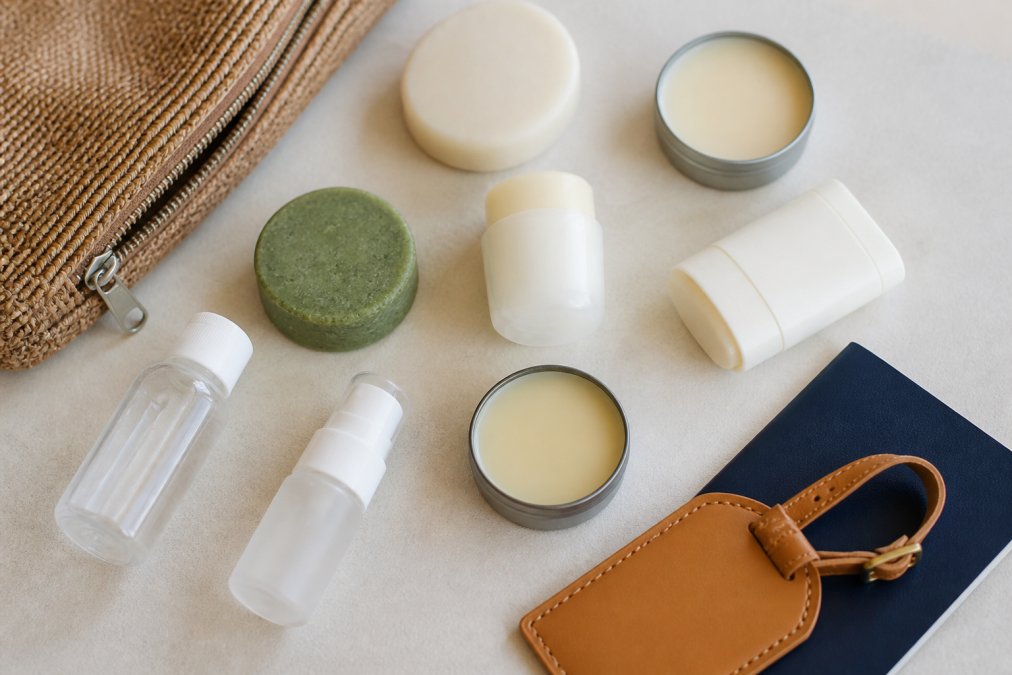
CrispNest customers frequently ask whether premium beauty products are actually worth the investment for travel. The answer is yes, but only if they're designed for travel from the start. A solid product from a reputable brand can offer durability and performance across different climates and water conditions. That durability can justify the upfront cost.
Space-Saving Travel Accessories That Actually Work
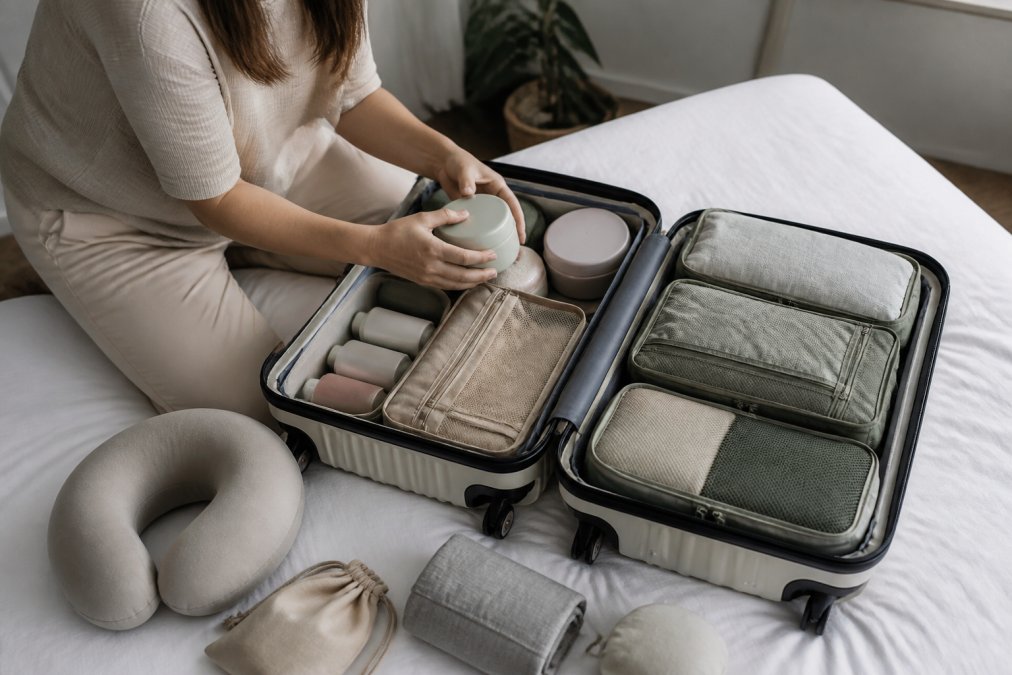
Collapsible containers and compression organizers dominate efficient packing, but not all versions perform equally. The difference between a collapsible container that lasts one trip and one that lasts fifty comes down to material quality and design.
Silicone-based collapsible containers outperform plastic alternatives because silicone withstands repeated folding without cracking or warping. They're lightweight, food-safe, and compact, collapsing to nearly flat when empty. A set of three silicone containers in different sizes replaces multiple rigid plastic boxes and saves significant luggage space.
Compression cubes organize clothing while reducing volume. Unlike generic plastic organizers, quality compression cubes feature reinforced seams and durable zippers that survive repeated packing cycles. They're particularly valuable for minimalist packing because they let you see what's inside without opening each cube.
The New Jersey Home 20 oz Tumbler from CrispNest represents the kind of accessory that justifies its place in your luggage. Double-wall vacuum insulation means your beverages stay at the right temperature for hours. The narrow design fits most cup holders, in car rentals, airplane seat backs, and coffee shop cup holders. The ring grip prevents drops, and the sliding lid eliminates spills. At $21.59, it's a one-time purchase that lasts for years of travel.

Packing organizers matter most when you're managing limited space. A well-designed travel kit reduces decision fatigue, you know exactly where everything is, how much you're carrying, and whether you have room for souvenirs.
Reusable Toiletry Containers and Sustainable Hydration
Reusable containers replace single-use packaging and reduce waste throughout your journey. The shift from disposable to reusable isn't just environmentally responsible, it's practical. You control refill quantities, avoid paying markup prices for travel-size bottles, and eliminate packaging waste.
Glass or stainless steel containers can be a good alternative to plastic because they don't absorb odors, don't leach chemicals, and can last indefinitely. A small glass container with a secure lid holds your preferred moisturizer, sunscreen, or any liquid product. Refill before each trip, and you've eliminated the need to buy travel-size versions.
Sustainable hydration solutions center on reusable water bottles designed for travel. Collapsible bottles pack flat and weigh almost nothing when empty. Insulated bottles maintain temperature but add weight, a reasonable trade-off if temperature control matters for your destination or travel style.
TSA Compliance for Solid-State Toiletries
Solid toiletries face no liquid restrictions under TSA guidelines. A solid shampoo bar, solid deodorant, solid perfume, or solid lotion can travel in carry-on luggage without size limitations. This distinction matters because it eliminates the 3.4-ounce liquid rule entirely for these products.
Powders and dry products also bypass liquid restrictions, though powders over 12 ounces may require additional screening. Solid products offer the clearest path through TSA checkpoints without complications.
Disposal and End-of-Life Instructions
What happens after your trip determines whether your travel gear truly aligns with sustainable travel values. Biodegradable products break down naturally, while plastic-based items persist in landfills for decades.
Solid toiletries can biodegrade completely when disposed of properly. A shampoo bar that reaches the end of its life can be composted or simply discarded without environmental concern. Plastic containers, by contrast, require proper recycling infrastructure, and not all destinations offer reliable recycling programs.
Check product packaging for disposal instructions. Reputable brands specify whether products are compostable, recyclable, or require standard waste disposal. This information guides your end-of-trip decisions and prevents contributing to landfill accumulation at your destination.
Minimalist Packing List for Travelers
A minimalist packing approach focuses on versatile items that serve multiple purposes. Instead of packing separate solutions for different scenarios, you select pieces that work across contexts.
Start with a color palette: three neutral base colors that coordinate with each other. Build your clothing around these colors, ensuring every piece pairs with at least two others. This constraint forces intentional selection and eliminates "just in case" items that never get worn.
Ethically sourced travel apparel matters if you care about labor practices and environmental impact. Brands that transparently share manufacturing locations, worker conditions, and material sourcing align with conscious consumerism values. Natural fibers like organic cotton, linen, and merino wool perform well across climates, resist wrinkles, and biodegrade at the end of their lifecycle.
A practical minimalist packing list includes:
- Three tops in your base colors
- Two bottoms (pants and shorts or skirts)
- One lightweight layer for temperature variation
- Undergarments for 4-5 days (you'll wash mid-trip)
- One pair of walking shoes and one pair for other activities
- Socks for 4-5 days
- Sleepwear
- Basic toiletries in reusable containers
- Phone charger and one universal adapter
- Small first-aid kit
- Medications and prescriptions
- Travel documents and copies
This list keeps total luggage weight under 15 pounds for a week-long trip, leaving room for souvenirs or items you acquire along the way.
Budget-Friendly DIY Eco-Swaps for Travel
You don't need to buy specialized travel products to reduce waste and cut luggage weight. Simple DIY swaps replace expensive travel-specific gear with items you likely already own or can make for minimal cost.
Transfer liquids into small glass jars instead of buying travel-size bottles. A mason jar can hold two weeks of moisturizer for a fraction of what you'd pay for travel-size packaging. Label the jar with waterproof tape to prevent confusion.
Make your own solid deodorant by mixing coconut oil, baking soda, and essential oils. The formula can be cost-effective and last for months. Solid deodorant doesn't require TSA scrutiny and takes minimal luggage space.
Create a reusable toiletry roll from fabric scraps or an old pillowcase. Fold it to hold your solid toiletries, toothbrush, and small items. This DIY organizer can be a cost-effective solution and may outperform many commercial travel organizers.
Dry shampoo made from cornstarch and cocoa powder extends the time between hair washes, reducing water usage and simplifying your routine. Mix two tablespoons cornstarch with one tablespoon cocoa powder (or skip cocoa if you have light hair), store in a small container, and apply with a brush when needed.
These swaps save money, reduce packaging waste, and give you complete control over ingredients. They're particularly valuable if you have sensitive skin or prefer to avoid certain chemicals.
Calculating Carbon Footprint of Travel Gear
Understanding the environmental impact of your travel gear encourages more conscious purchasing decisions. Carbon footprint calculation considers manufacturing emissions, transportation, material sourcing, and end-of-life disposal.
A single plastic water bottle generates approximately 100 grams of CO2 equivalent during manufacturing and transportation (peer-reviewed research). If you replace it with a reusable bottle used 100 times, you've offset that impact within the first 100 uses, a realistic scenario for any regular traveler.
Clothing manufacturing carries significant carbon weight. A cotton t-shirt generates roughly 2.7 kilograms of CO2 equivalent from production through transportation (peer-reviewed research). Wearing that shirt 50 times reduces the per-wear carbon impact to 54 grams. This calculation reveals why quality pieces worn repeatedly outperform cheap items worn once or twice.
Material sourcing matters substantially. Organic cotton production generates lower emissions than conventional cotton because it avoids synthetic pesticides and fertilizers. Recycled materials reduce manufacturing emissions by 30-50% compared to virgin materials. Wool and linen require less water and fewer chemicals than cotton.
Calculating your gear's total impact:
- Research each product's manufacturing carbon footprint (often listed in sustainability reports)
- Estimate how many times you'll use it during your travel lifetime
- Divide total emissions by usage frequency to find per-use impact
- Compare against single-use alternatives to understand the real savings
A quality travel friendly lifestyle product that lasts five years generates dramatically lower per-use emissions than a cheap alternative replaced every six months.
Conclusion: Choose Quality That Lasts
Travel doesn't require sacrificing sustainability or quality. The best travel friendly lifestyle products combine durability, thoughtful design, and environmental responsibility, creating gear that works harder and lasts longer.
CrispNest specializes in selecting products that meet these standards. Our curated collection focuses on items built for real-world use, designed to simplify your routine, and engineered to outlast cheaper alternatives. From the New Jersey Home 20 oz Tumbler that maintains your beverage temperature for hours to organizational tools that actually survive repeated packing, we've chosen pieces that deliver exceptional performance and value.
Frequently Asked Questions
Q: What are the best travel friendly lifestyle products for frequent flyers?
A: Frequent flyers benefit most from compact, durable items that meet TSA requirements. Look for collapsible water bottles, solid toiletries in small containers, lightweight clothing organizers, and a quality insulated tumbler like the New Jersey Home 20 oz Tumbler ($21.59) for temperature-controlled beverages. Choose products made from recycled or sustainable materials to reduce environmental impact while traveling regularly.
Q: How do I pack sustainably without sacrificing space in my luggage?
A: Start with a minimalist packing list focusing on versatile, multi-purpose items. Use reusable toiletry containers instead of disposable bottles, pack solid toiletries that take minimal space, and choose lightweight, durable apparel in neutral colors. Collapsible organizers and compression bags help maximize space while reducing waste. Aim for items that serve multiple functions to cut down on total volume without compromising functionality.
Q: Are solid toiletries really TSA-compliant for travel?
A: Yes, solid toiletries like shampoo bars and solid deodorants are TSA-compliant because they don't fall under liquid restrictions. They must be solid at room temperature and cannot contain liquids or gels. Solid toothpaste, face bars, and concentrated soaps are all allowed in carry-on and checked bags. Always verify specific product formulations with TSA guidelines, as some products marketed as 'solid' may contain liquid components.
Q: What lifestyle products should I avoid packing to save space?
A: Skip single-use items, oversized toiletry bottles, and duplicative tools. Avoid bulky hair styling devices if your destination has reliable outlets, and don't pack full-size cosmetics when travel-sized or solid alternatives exist. Leave behind items you rarely use at home, they won't suddenly become essential while traveling. Focus on multi-functional products that serve several purposes rather than single-task items.
Traveling sustainably starts with choosing gear designed to last. CrispNest's thoughtfully selected travel essentials combine durability, modern style, and practical functionality to streamline your packing process. Explore our collection of premium, long-lasting products that reduce waste while making your travels easier and smarter.
This article was written using GrandRanker


